By role
Doorly for heads of culture
You already know the argument this page is going to make, because it's the one you've been making internally: culture isn't the events. It's what happens on the days in between, and events only count when they're the visible peak of something already there.
December is the one month you're handed budget and attention for exactly the wrong shape of thing — one evening, one venue, one guest list. Here's the case for spending some of it on a daily ritual instead.
“I can already tell my co-workers will really enjoy this. Everything is well thought out.”
“Delivered very quickly. Instructions were very clear. The calendar itself is fun and engaging.”
“Very straightforward set up and an interesting story!”
The annual event is a poor foundation
A Christmas party does real work, but it happens once, and whatever it generates has a half-life measured in days. It excludes by construction — a place and a time means some people can't be there, and it's the same list every year. And it leaves no residue: nobody refers back to last year's party in March.
What one evening can't do
- Reach the people who can't attend
- Repeat tomorrow
- Include the quiet half of the company
- Leave anything behind in February
Repetition is the mechanism
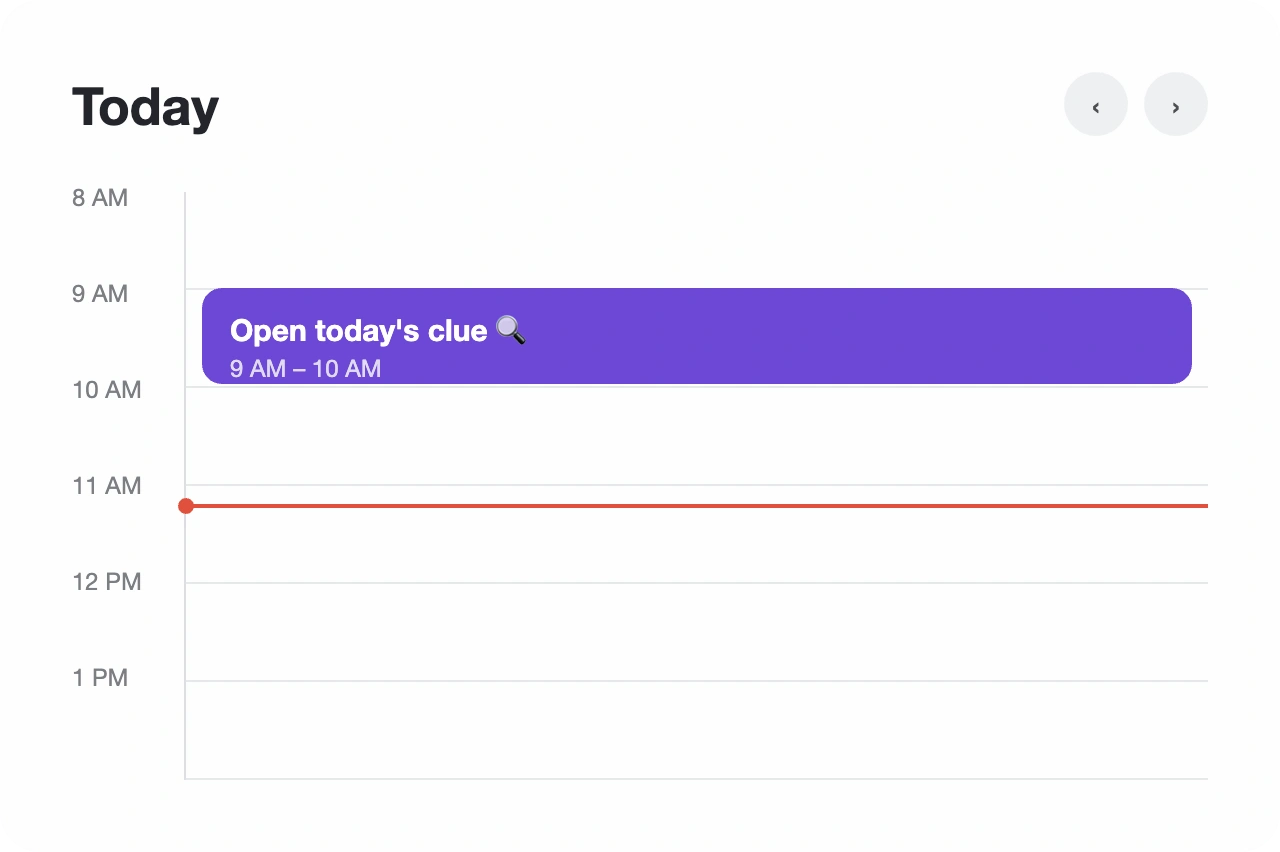
Doorly is a 24-day murder mystery released one door at a time — everyone opens the same door on the same day, on about five minutes of attention. The part that matters isn't the story, it's the repetition: twenty-four consecutive days of a shared, low-stakes thing to have an opinion about builds a habit of talking to each other about something that isn't a ticket.
It gives quieter people a way in
Every culture programme has the same blind spot: it's most enjoyed by the people who need it least, because loud in-person formats select for loud in-person people. A written, asynchronous mystery selects differently — you take part by having a theory, in your own time, in text. The colleague who never speaks in stand-up turns out to have been building a suspect timeline since day three.


The argument crosses the org chart
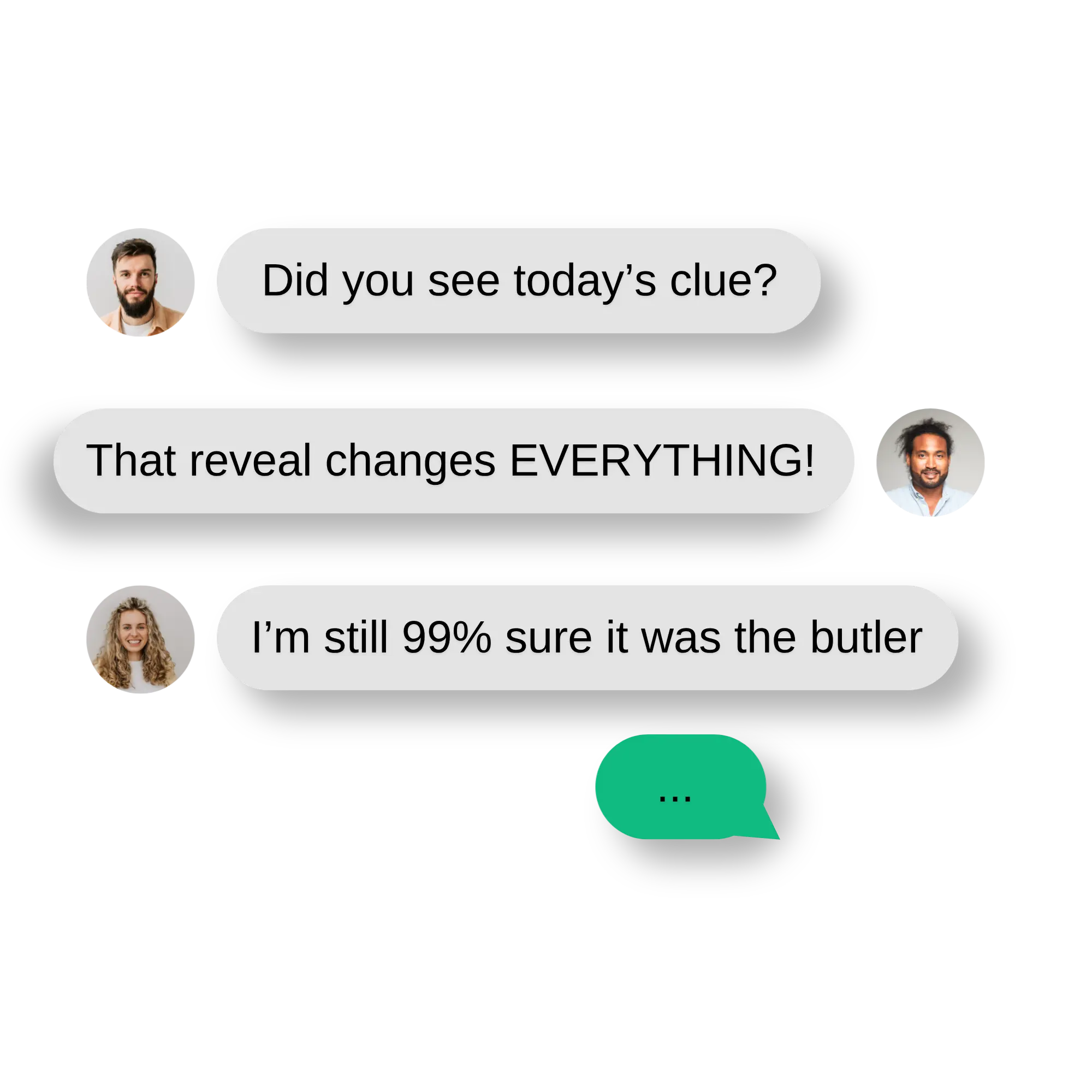
Who's lying doesn't respect reporting lines. An engineer, someone in finance and a new starter in support end up in the same thread because they all think it was the gardener — precisely the connections that don't form on their own in a distributed company.


It leaves a shared reference behind
Rituals leave residue, and the residue is the point. Teams that have run a mystery together have in-jokes about it in February, and new starters get told about it. It becomes one of the small handful of things a company can say "we do this" about — and unlike a party, running it again isn't a repeat, it's a returning tradition with last year's winner defending a title.
It also isn't a replacement for the party, and pitching it as one is a mistake. The calendar covers the twenty-three days the party doesn't, and plenty of teams crown the mystery's winner at the party itself.
The objections you'll field internally
Are we replacing the Christmas party with this?
No, and pitching it that way is a mistake. The party does a different job and is worth keeping. The calendar covers the twenty-three days the party doesn't, and the two work well together — plenty of teams crown the mystery's winner at the party itself, which gives the evening a shared moment that isn't a speech.
Won't people lose interest by week two?
Some will, and the participation curve shows it — there's a reliable dip in the middle of the month. Two things pull it back: the story turns in the second week when alibis stop lining up, and accusations opening near the end brings back people who'd drifted. Missing days doesn't lock anyone out, because the story is cumulative rather than strictly sequential.
Is this just another thing on people's plates?
It's five minutes, it's optional, and there's no meeting to attend. Nobody is marked absent for skipping a day. That's deliberate — anything mandatory stops being culture and starts being a task, and a daily ritual only works if opting out is genuinely free.
Does it work for a company that has no office at all?
It tends to land hardest there. Fully remote companies often have no December moment whatsoever, so the calendar becomes the thing — the one point in the year when everyone is doing the same thing on the same day, without a timezone deciding who's included.
How do I show it worked?
The dashboard gives you daily open rates across the month and how many people reached the final accusation. For a role that spends a lot of its time arguing for things that are hard to measure, a participation curve is a far better basis for next year's conversation than the fact that people said it was nice.
Culture on the other twenty-three days
One shared story, one link, and everyone in the company on the same door on the same day.
See pricing